

FieldBee’s portfolio is taking a more connected shape in 2026. The company is bringing together tractor guidance, implement control and farm management, while preparing the next stage of development for 2027.
The introduction of myFieldBee marks an important step in FieldBee’s development this year. Alongside PowerSteer, PowerSteer Ready and Jaltest ISOBUS, it gives the company’s growing portfolio a common direction: connecting the machine working in the field with the plans, tasks and records that surround it.
This summer, FieldBee and xFarm Technologies highlighted their collaboration on myFieldBee, showing how guidance technology and farm management can work together. The result builds on FieldBee’s established autosteering offering and extends its role across more of the farming operation.
The broader portfolio adds new ways to use precision farming, from activating the built-in steering capabilities of a compatible tractor to controlling an implement and bringing field activity back into farm records.
PowerSteer continues to develop
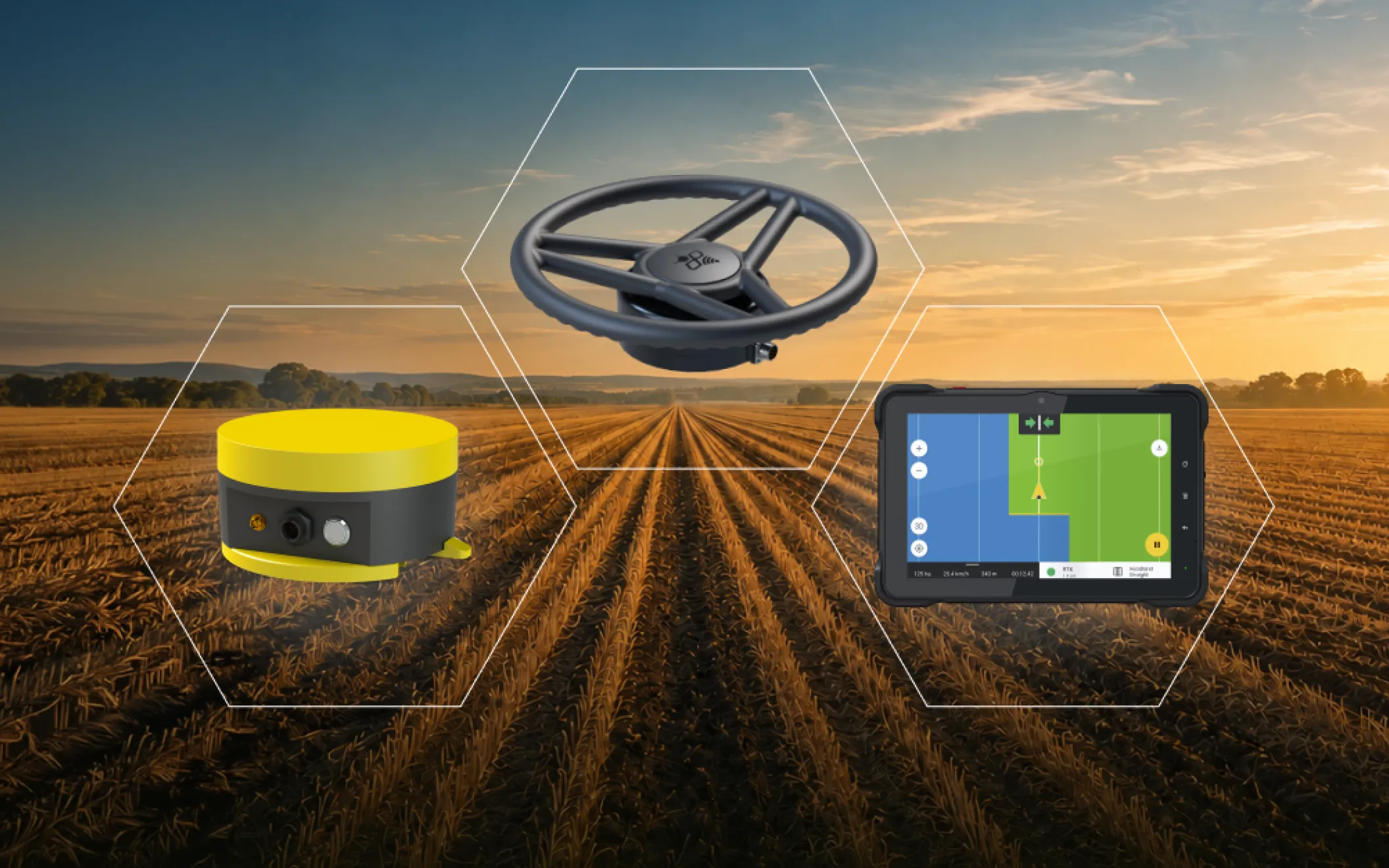
As the portfolio expands, development of PowerSteer continues across hardware and software. Its integrated RTK receiver and steering controller, motorised PowerWheel and Android navigation application remain the foundation for automatic steering. Around that foundation, the range of functions and supporting equipment has grown.
The Control Switch Panel is one practical example. It gives operators physical buttons for activating autosteering, creating AB lines and adjusting guidance lines, making these functions accessible without reaching for the tablet screen. It is part of a broader effort to make precision guidance easier to use during everyday fieldwork.
Successive updates to the FieldBee Navigation App have added headland and automatic turning functions, guidance lines created from field boundaries, prescription-map visualisation and support for reversible implements. Improvements to data synchronisation have also made it easier to manage the information associated with field operations. Together, these changes extend the system’s usefulness beyond following a straight line.
PowerSteer’s role also extends into the harvest season. Support for compatible combine harvesters brings automatic guidance to another demanding operation, helping operators maintain consistent passes and spend less of a long working day making steering corrections.
PowerSteer Ready broadens the options for existing tractors
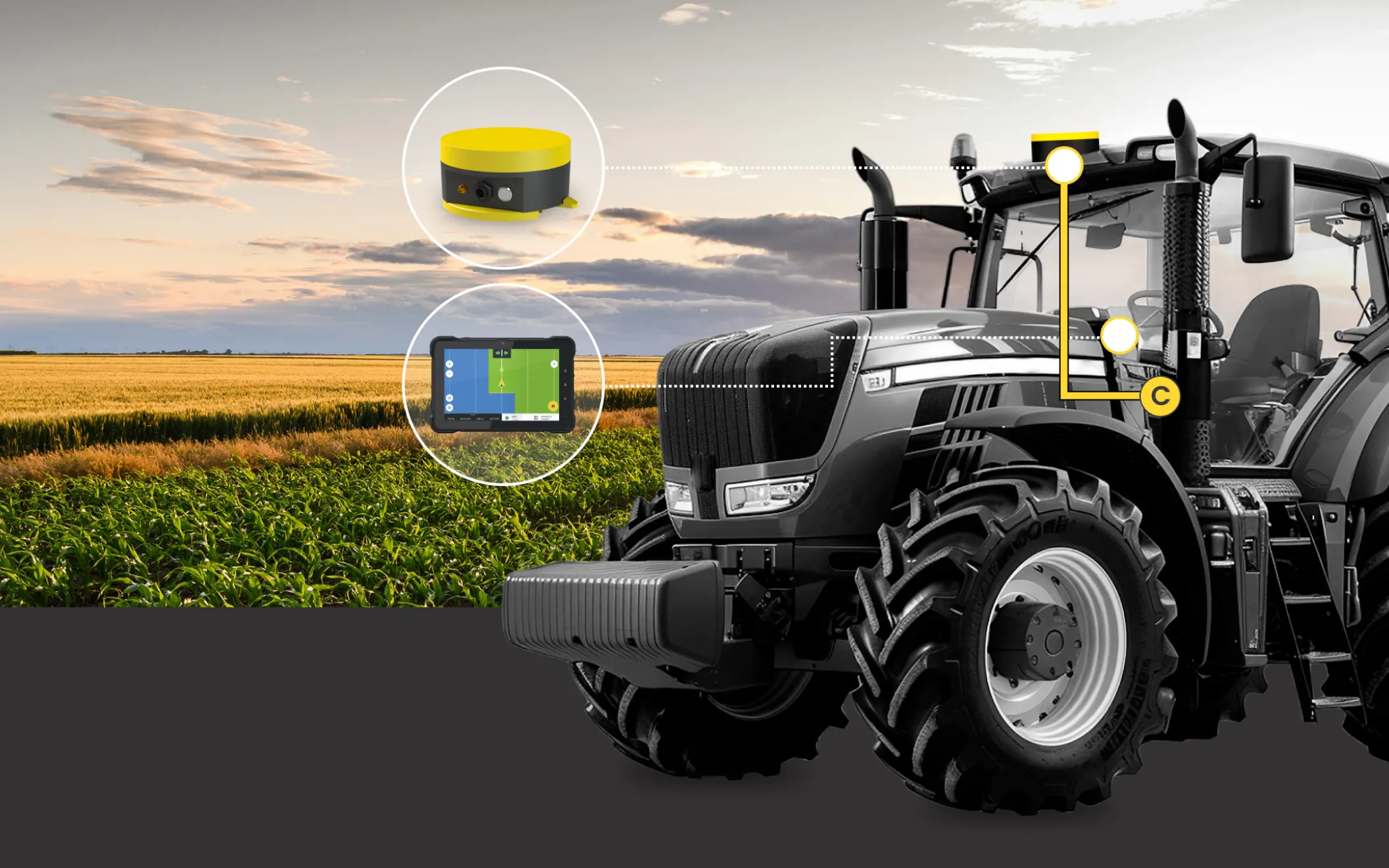
PowerSteer Ready is another important part of this expansion. It connects FieldBee guidance to the factory-installed steering hardware in compatible steer-ready tractors through the CAN bus. This enables autosteering without replacing the steering wheel with a PowerWheel or installing an additional hydraulic steering kit.
For farmers, this creates a choice that reflects the machinery they already own. A tractor that needs an electric steering-wheel retrofit can use PowerSteer; a supported tractor with built-in steering preparation can use PowerSteer Ready. Both approaches bring the machine into the FieldBee guidance environment.
Extending compatibility across more brands and models remains part of FieldBee’s development direction. For farms with a mix of machines, this matters: the route into precision farming should fit the tractor’s capabilities and configuration. Individual model compatibility remains a key part of selecting the right system.
ISOBUS connects guidance with the work of the implement
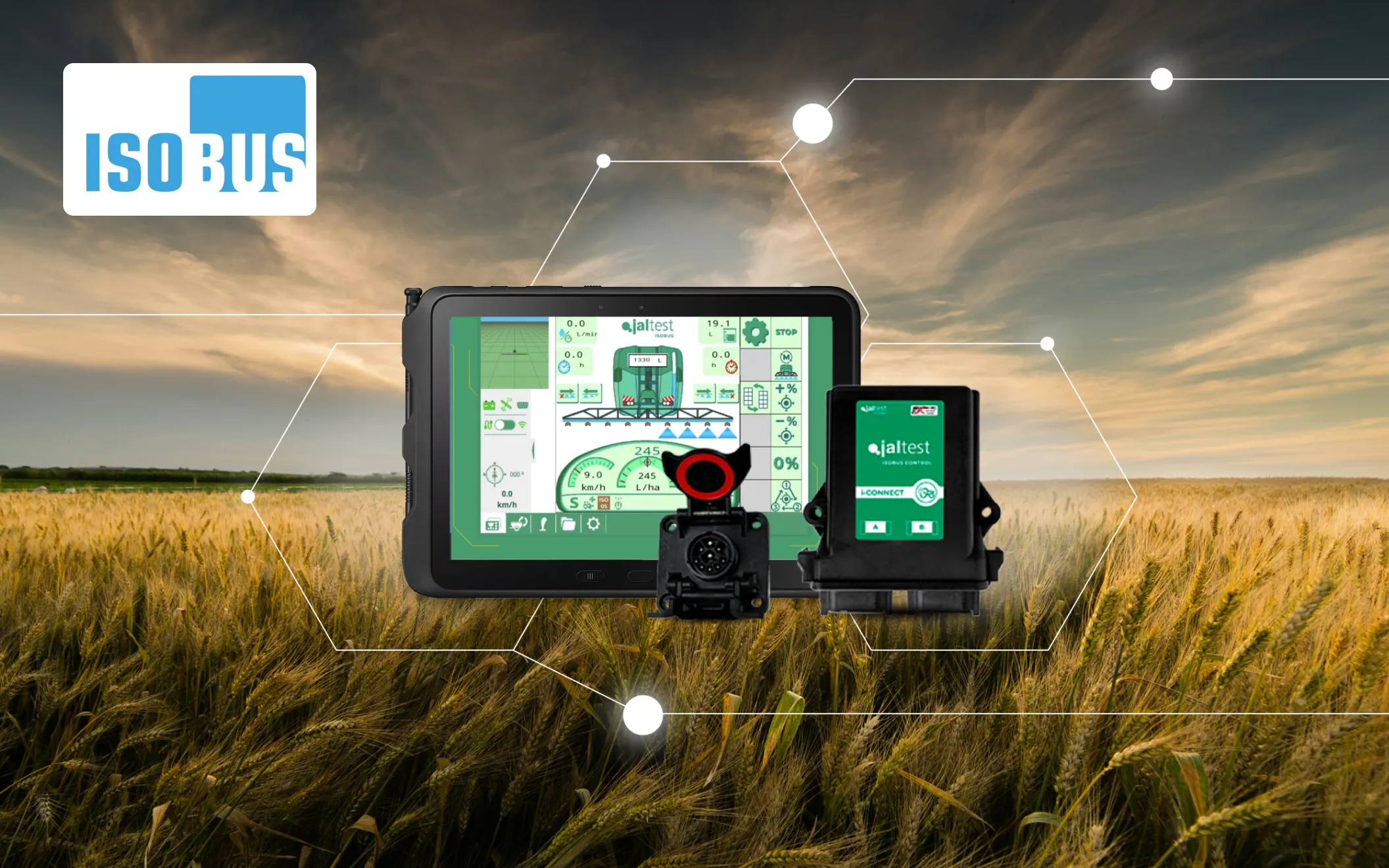
Jaltest ISOBUS extends the portfolio to the equipment doing the actual application. Alongside keeping the tractor on its planned path, farmers can monitor and control compatible ISOBUS implements from an Android terminal.
Depending on the implement and activated functions, the system supports automatic section control and variable-rate application using prescription maps. For a compatible sprayer, seeder or fertiliser spreader, this links accurate guidance with decisions about where and how inputs are applied.
The portfolio also offers a simpler step through Implement Section Display. This software feature provides visual guidance on when to switch implement sections on or off, with the operator carrying out the switching. It gives farmers another way to improve application accuracy as they develop their precision farming setup.
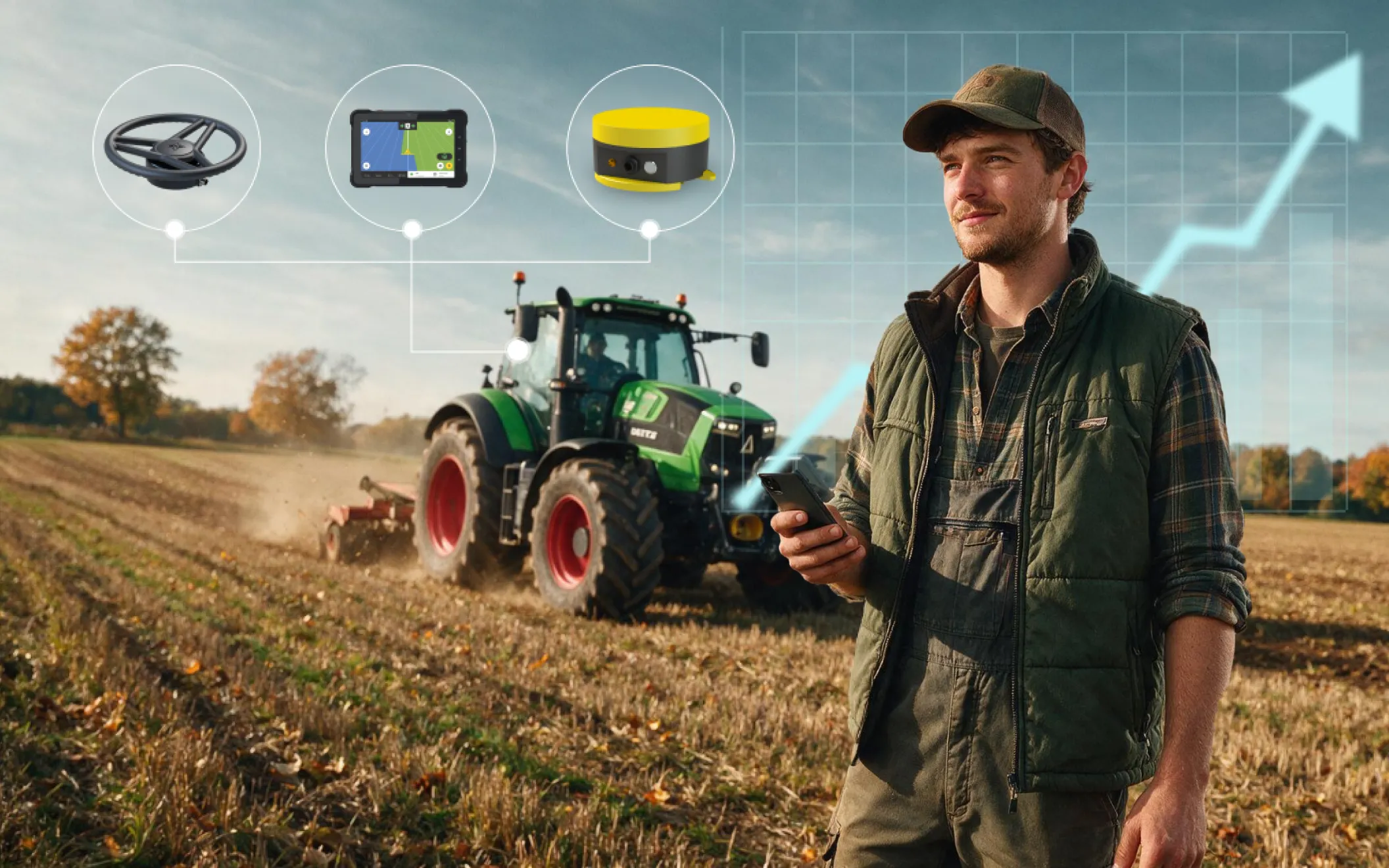
Together, these options broaden the practical role of FieldBee: guiding the tractor, supporting implement operation and, through myFieldBee, connecting the resulting field activity with farm management.
myFieldBee brings planning, fieldwork and reporting together
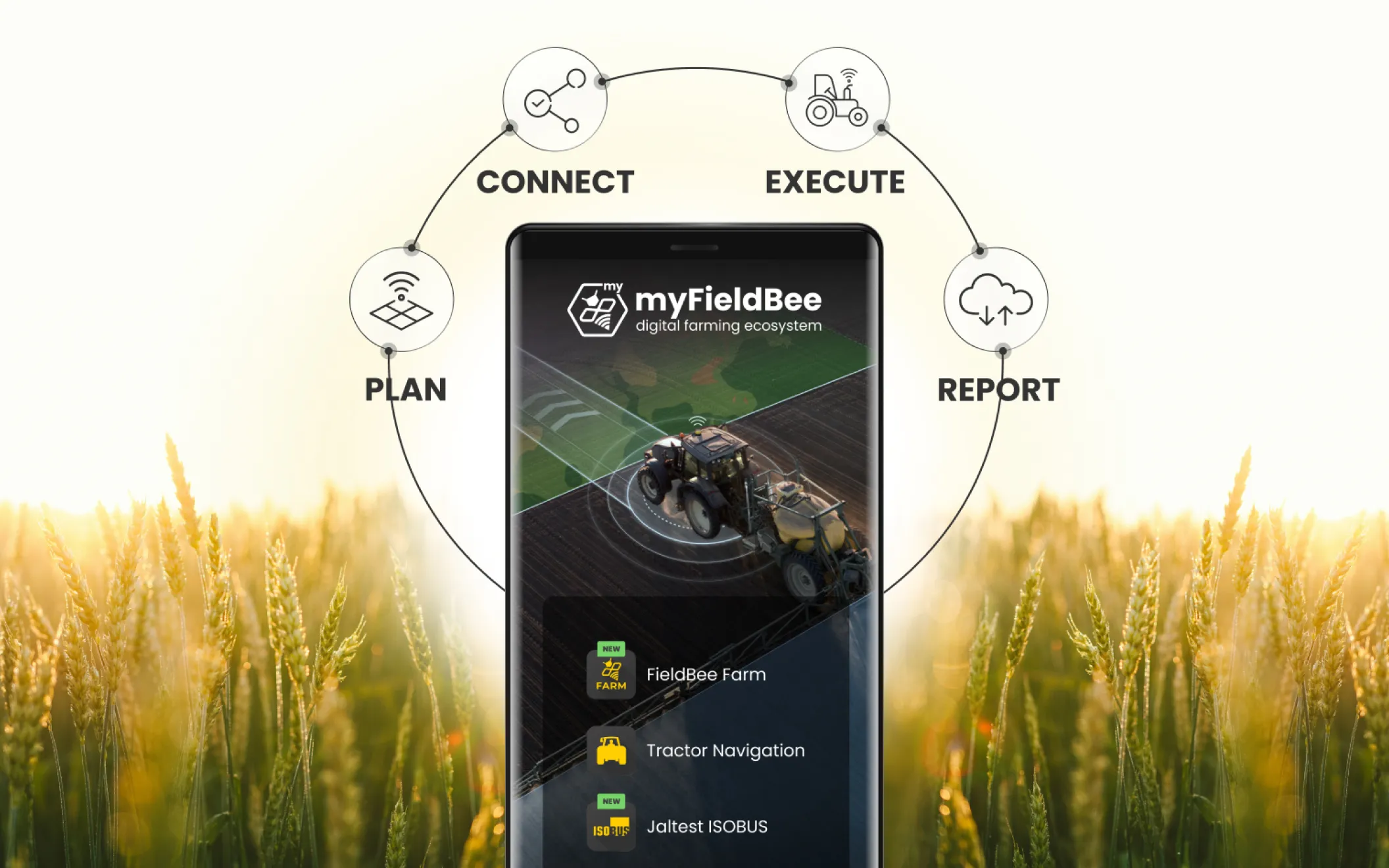
One of the clearest developments in 2026 is the introduction of myFieldBee as the connecting layer across the portfolio. It brings together FieldBee Navigation and Autosteering, Jaltest ISOBUS and FieldBee Farm, the farm management information system developed with xFarm Technologies.
The value of this connection becomes clear when following a task through the farm. Planning begins in FieldBee Farm, where a farmer can organise an activity and assign it to a field. With machine synchronisation enabled, that task can be sent to the connected machine and selected by the operator in FieldBee Navigation.
Guidance then supports the work in the field, while a compatible ISOBUS setup allows the operator to manage the implement. Recorded machine activity feeds back into FieldBee Farm for review and reporting, helping connect the original plan with the work carried out.
This changes how the individual products fit together. A guidance system becomes part of a wider workflow that also supports preparation, coordination and record-keeping. Farmers can start with the functions they need: FieldBee Farm can be used independently, while machine synchronisation is available through a subscription for a connected setup.
Helping farmers save time and use resources more efficiently
The value of this connected approach lies in making everyday work easier and resources go further. Autosteering reduces the need for constant steering corrections, easing operator fatigue during long working days. Combined with compatible implement control, it can help reduce overlaps and unnecessary use of seed, fertiliser and crop protection products. Connecting fieldwork with farm records also reduces manual data entry and makes it easier to track what was done, where and when. With options for existing machinery and the flexibility to add functions over time, farmers can improve efficiency at a pace that suits their needs and budget.
The 2026 season reinforces the focus on practical adoption
Conversations with farmers this year have reinforced why these connections matter. Across agricultural shows, technology events and gatherings for farming communities, the FieldBee team heard strong interest in improvements that deliver value with manageable investment, straightforward installation and reliable support. Ease of use was a recurring priority.
Those conversations reflect the purpose behind the wider portfolio. Farmers need a practical route from the equipment they have today to the capabilities they want next. Combining retrofit steering, support for steer-ready tractors, implement control and farm management gives them more ways to take that next step.
Looking ahead to 2027
The next stage will continue to build on this foundation. FieldBee’s direction for 2027 includes further development of PowerSteer and work on a new platform based on vision technology.
Vision has already featured in the company’s activities this year. At EDZ ICT 2026 in Croatia, FieldBee presented its vision technologies and explored how information collected in the field can lead to decisions and practical action. That direction adds another dimension to the connected ecosystem now taking shape.
For FieldBee, becoming more than autosteering means building stronger connections between guidance, implements and farm information. The developments visible in 2026 show how that broader offering is coming together, with more to follow in 2027.


